
Most bird owners have heard that it's important to monitor their feathered friend's droppings for signs of illness. However, it can be difficult to determine exactly what is "normal" when it comes to bird poop.
It might seem gross, but analyzing your bird's droppings for color, texture, and other factors can go a long way in keeping your pet healthy. Use the bird poop chart above to identify how your bird's droppings should generally look—and what different characteristics may indicate.
What to Look for in Your Bird's Droppings
When monitoring a bird's droppings, generally you'll want to focus on five factors: color, textures, odors, presence of liquids, and size. Here's more about each.
- 01 of 05
Colors
Healthy bird droppings can display an array of colors and still be considered "normal." Your bird likely consumes many various types of fresh fruits and vegetables, a multitude of different seeds, and a variety of multi-colored pellets if you supplement your bird's meals with a commercially available diet. The food dyes in these pellets, combined with the natural colors of the fresh foods your bird eats, will naturally produce a rainbow of colors in their droppings.
However, if you notice that your bird's poop suddenly changes color, it can be a sign of severe health problems that need prompt veterinary attention.
02 of 05Textures
The texture of the droppings will also vary based on your bird's diet. However, there are certain things to keep in mind when analyzing your bird's poop to make sure that it's healthy.
For one thing, the dropping should be neither too wet nor too dry. A good rule of thumb is that the poop should be close to mimicking the consistency of toothpaste, for lack of a less disgusting analogy. Be on the lookout for droppings that are very dark or seem "tarry," as this can be a sign of internal bleeding, which requires immediate veterinary care.
03 of 05Odors
In general, your bird's droppings should produce little to no odor. Poop that seems overly smelly can be indicative of infection, intestinal problems, or other types of illness. This is not to say you should get down and sniff your bird's droppings; that can be harmful to your health. Rather, pay attention when your bird uses the bathroom, and see if there seems to be any noticeable scent wafting around the cage. If your nose detects something that's just not "right" about the odor, it's probably a good idea to contact your bird's vet for an evaluation.
04 of 05Presence of Liquids
Unlike mammals and other types of animals, a bird's droppings are not normally solid. Rather, there should be a fair amount of liquid present in a healthy bird's waste, as a bird's anatomy does not have a separate mechanism for eliminating liquid waste from its body.
Instead, urine and feces are expelled at the same time. The urine in bird droppings normally presents itself as a white-colored, pasty liquid and usually comprises around 30% to 50% of the volume of the droppings. While this can vary slightly without being cause for alarm, you should definitely report to your avian veterinarian if you fear that there is too much or too little liquid in your bird's waste.
Continue to 5 of 5 belowclass="comp sources mntl-block">05 of 05Size and Amount
As one might expect, the volume of a bird's droppings will be relative to the size of the bird producing them. In other words, small birds will produce smaller droppings, and larger birds will produce larger ones. Depending on the diet, slight variations in what is a normal amount of droppings for any given bird are to be expected, but any drastic change in the size or frequency of your bird's poop should be noted and reported to your veterinarian. If you are worried about how often your bird poops, you can add a blueberry to their diet. This addition will turn your bird's poop blue, and you can measure how long from feeding time it takes for a blue poop to result.
Again, paying attention to your bird's droppings when cleaning out its cage will give you the best idea of what fits inside the normal range for your particular bird.
If you suspect your pet is sick, call your vet immediately. For health-related questions, always consult your veterinarian, as they have examined your pet, know the pet's health history, and can make the best recommendations for your pet.Related Article
 small-birds
Facts About Lovebirds
Lovebirds are one of the most popular pet parrot species, and for those who are familiar with them,
small-birdsMynah Bird: Bird Species Profile
If you want a chatty, intelligent bird to share your home, then the tropical mynah bird is the pet
medium-birdsHow to Care for a Pet Amazon Parrot
An Amazon parrot is a classification of several different kinds of parrots that hail from Central a
bird-healthAvian Flu in Pet Birds: Should You Be Concerned?
With any report of avian flu in the news, it can be hard not to wonder whether your pet bird is at
bird-healthHow to Help Your Bird Gain Weight
There are several things that you can do to help a bird gain weight, but the very first thing that
bird-breedsVasa Parrot: Bird Species Profile
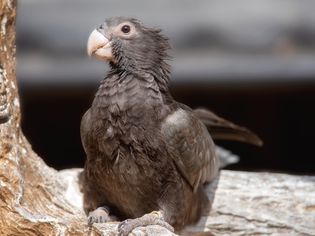
The Vasa Parrot is a medium-sized gray parrot that hails from Madagascar. The Vasa Parrot is about
bird-breeds8 Top Brightly Colored Pet Birds
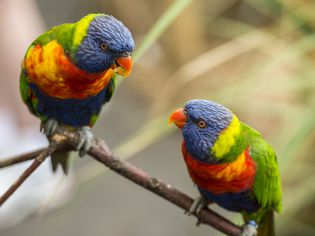
Although parrots and other pet birds come in pretty much every color of the rainbow, most sport onl
bird-basicsCan Cats and Birds Live Together?
Cats are naturally predators while birds are naturally prey so this can cause issues if these two k
About WhiskerClub
We are a premier digital platform committed to delivering high-quality content to our readers. Our mission is to provide accurate, reliable, and engaging information that adds value to our audience's daily lives.
Our team consists of experienced content creators and subject matter experts who uphold the highest standards of professionalism. In an era of information overload, we curate content with care, ensuring our users receive only the most relevant and trustworthy information.
Beyond just reporting facts, we focus on depth and context. Through expert analysis, comprehensive research, and clear presentation, we help our audience gain meaningful insights and make informed decisions.
We take pride in being a trusted information source for our growing community of readers. Our user-first approach means we continuously adapt to provide content that meets our audience's evolving needs and interests.
Innovation and excellence drive everything we do. We're committed to improving our platform and services to deliver the best possible experience for our users.
Comments on " Bird Poop Identification Chart" :